In This Guide
Renting a mobile office trailer may seem like a simple decision, but choosing the wrong unit can lead to reduced productivity, compliance challenges, unexpected costs, and an uncomfortable work environment for your team. With a wide range of layouts, power configurations, and optional features available, it’s important to thoroughly evaluate your needs before signing a rental agreement.
This guide outlines the eight most important factors and questions to consider when selecting a mobile office or storage trailer. By understanding what to look for upfront, you can ensure your jobsite headquarters is functional, compliant, and equipped to support your team from day one.

Mobile Office & Storage Trailer Sizing & Layout
1: How Do You Calculate the Right Office Trailer Size and Layout?
The total floor plan of your mobile office trailer rental should match your actual on-site workflow, not just your total project headcount. A superintendent coordinating quick daily subcontractor turnaround requires a design that functions differently from a technical engineering office processing blueprints and administrative compliance paperwork.
When evaluating spatial needs, consider these layout choices:
- Differentiate by Functional Zone: Map out your required workspaces before selecting a hull. Account for permanent drafting desks, filing storage units, and isolated blueprint tables to preserve clear interior pathways.
- Assess Partition vs. Open-Plan Configurations: Determine whether your administrative teams require private interior partitions for human resources, document control, coffee station, and team meetings, or if an open-plan layout fits your collaborative tasks better.
- Plan for Modular Expansion Pathways: On major multi-phase infrastructure developments, verify if your mobile hulls can be linked together into a larger operational office complex to support growing administrative teams without requiring a full swap-out.
Mobile Office Trailer Dimensional Guide
| Trailer Footprint | Target Crew Capacity | Optimal Jobsite Application |
|---|---|---|
| 10x50 ft Office Unit | 1 to 4 People | Best for a single field superintendent, permit office, or independent subcontractor checkpoint. |
| 14x64 Mid-Size Hull | 3 to 6 People | Ideal for multi-department project management hubs and small engineering review teams. |
| 14x74 Extra-Wide Office Trailer | 6 to 12 People | Optimized for regional operations, main project command centers, and safety orientation spaces.. |
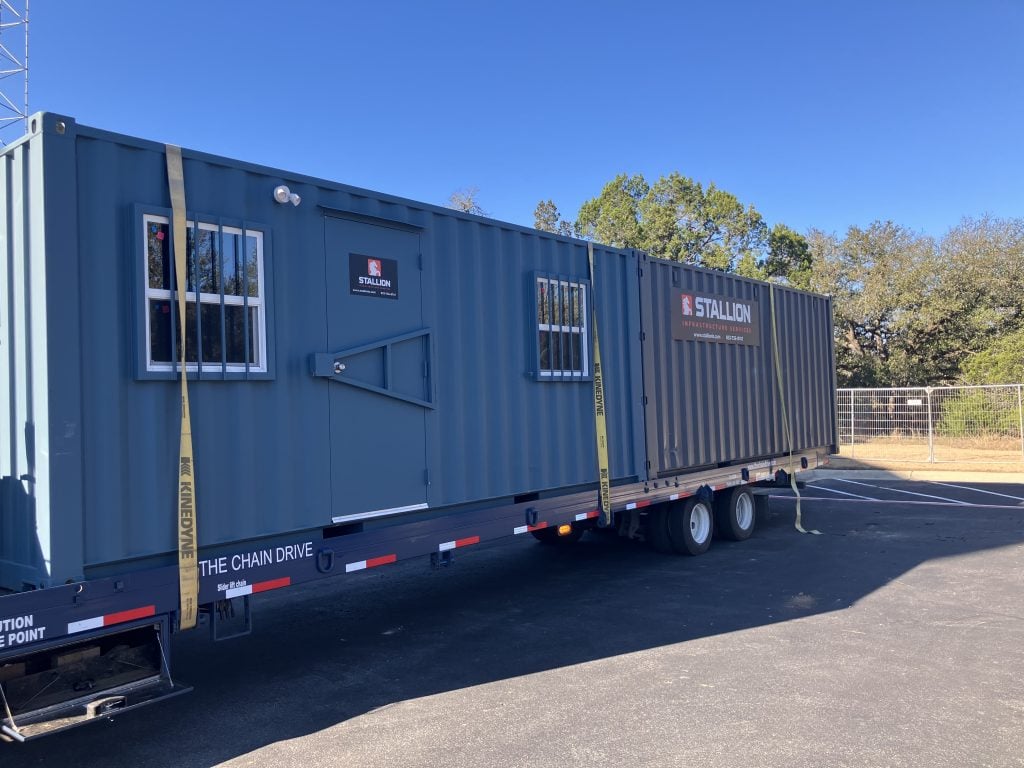
| 40ft Combo Office & Storage Unit | Variable | Best for multi-function needs that combine mobile office and storage space in one. Features 20 feet of dedicated climate-controlled office space combined with 20 feet of secure storage. |

Systems & Infrastructure: Equipping Your Mobile Trailer with HVAC, Electric & Connectivity
2: What HVAC and Insulation Capacity Is Required for Extreme Climates?
An underpowered climate control system can impact field team performance and compromise sensitive project data workflows. Jobsites in Texas heat or northern winters place heavy demands on climate systems. Always ask for the BTU rating relative to the unit’s square footage and your climate zone.
- Evaluate BTU Output Ratings: Use a baseline of approximately 25-30 BTU per square foot of interior space, depending on climate and insulation quality. A standard 12x60 trailer (720 square feet) requires a minimum of 18,000 BTU of climate capacity. Scale this parameter upward if your footprint houses multiple active workstations or operates in high-heat zones.
- Verify Independent Heating Capacity: Ensure your mobile office space features a dedicated heating mechanism rather than a basic heat-pump loop, which can lose operational efficiency when ambient temperatures drop.
- Inspect Structural Insulation Quality: Confirm wall insulation R-values and check structural door and window seals to ensure weather resistance, reduce external noise, and maintain interior climate control.
- Inquire About Maintenance and Service Response Time: If the HVAC fails in July, what is the provider's response time? A reputable vendor should be able to answer in hours, not days.
>> For Consideration:
If your trailer will house computers or sensitive documents, consider asking for units with supplemental ventilation. Standard HVAC isn’t always enough to manage the heat load from multiple workstations running simultaneously. You may also want to consider secure jobsite storage containers that offer climate control.
3: How Do You Match Electrical Panel Specs to Your Jobsite Power Source?
Inadequate power and lighting is a productivity killer. Whether you’re connecting to a site utility pedestal or running off a generator, your trailer’s electrical system needs to support everything from standard 120V outlets to 240V equipment without overloading circuits. Verify the panel capacity before you commit.
- Select Amperage Panel Specs Wisely: A standard 100A panel fits basic administrative trailers with modest HVAC and equipment loads. A 200A upgrade under higher power demands would be necessary.
- Ensure Generator Compatibility: Verify that the trailer's external electrical inlet matches your generator's plug configuration. Sourcing matched power and generator packages prevents voltage spikes and circuit overloads.
- Confirm Dedicated Circuit Separation: Distribute your interior outlets evenly across separate circuits to isolate high-load climate systems from sensitive network electronics, preventing frequent breaker trips.
- Enforce GFCI and Surge Safety Standards: Confirm that all outlets situated near sinks or wet entries feature NEC-compliant GFCI protection. Always use high-grade surge protection to safeguard your network hardware from dirty power spikes.
4: What Connectivity Infrastructure Do Your Remote Teams Need?
Modern construction workflows rely on real-time data exchange. Running advanced project management software, updating digital blueprints, and hosting client video conferences require enterprise-grade network connectivity.
- Insist on Structured Internal Cabling: Settle for trailers pre-wired with high-performance CAT6 structured data cabling and strategically placed internal Wi-Fi access points to avoid messy extension cords.
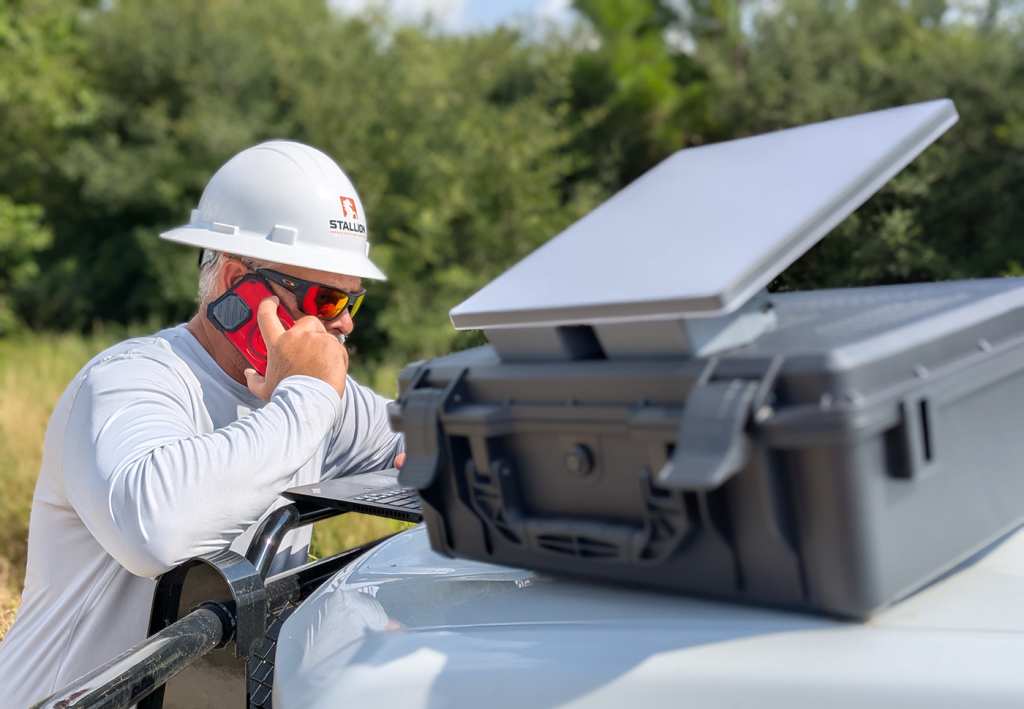
- Evaluate Off-Grid Satellite and LTE Backhaul: If your project operates outside reliable wired or cellular coverage, deploy specialized off-grid network solutions like Starlink for Business or commercial private LTE loops to keep field communications online.
- Verify Cellular Signal Amplification Systems: Standard industrial steel-walled trailers can block cellular frequencies. Deploying high-gain external antennas and cellular amplifiers ensures field teams maintain reliable voice and data lines.
>>Explore how integrated providers like Stallion set you up with the right package of communication and connectivity solutions that can be bundled directly with your trailer rental.

Construction Site Safety, Compliance & Security
5: How Do You Secure On-Site Office Hulls and Protect Critical Assets?
Jobsite command centers house high-value tools, proprietary blueprints, and critical compliance records. Securing these remote hubs requires combining heavy physical hardware with modern electronic site safety systems.
- Enforce Commercial-Grade Door Security: Insist on heavy-duty steel door frames, reinforced high-security hinges, and rugged physical deadbolt assemblies designed to withstand industrial wear and tear.
- Reinforce Exterior Window Barriers: Protect common entry points by adding heavy-duty exterior security bars, protective security film, or impact-resistant polycarbonate glazing panels.
- Staging Proactive Perimeter Visuals: Ensure your trailer footprint features bright, motion-activated external LED security lights and is pre-wired to integrate cleanly with mobile surveillance trailers to monitor your assets after hours.
>> Pro Tip:
If your site already requires mobile surveillance for perimeter security, ask about bundling your office trailer with surveillance hardware from the same provider. Stallion offers integrated solutions to simplify your vendor list and ensure compatibility between systems.
6: Which Local Codes and OSHA Compliance Standards Apply?
Temporary jobsite structures must comply with federal, state, and municipal safety regulations. Office trailers used as permanent or semi-permanent structures on construction sites may be subject to local building codes, OSHA requirements, and federal ADA regulations. A reputable provider should be able to document that their units meet relevant standards.
- Fulfill ADA Entry Accessibility Mandates: If your office trailer serves as a public-facing hub or accommodates administrative personnel, ensure your site footprint includes professional ADA-compliant ramp access.
- Review Emergency Egress Dimensions: Verify that all entry clear widths and emergency exit windows meet strict local building codes and applicable OSHA workplace safety requirements for long-term deployments.
- Verify Smoke and CO Detector Installation: Most jurisdictions require working smoke detectors in occupied structures. Ask whether detectors are installed and tested before delivery.
- Ask About Permit Support: Some municipalities require a permit to place a temporary structure. An experienced rental provider can guide you through the permitting process and provide documentation for inspections.


Logistics To Consider When Choosing A Storage & Office Rental Vendor For Your Jobsite
7: Delivery, Setup & Ongoing Support: What Technical Logistics and Support Service Levels Are Crucial?
The trailer itself is only part of the picture. A poor delivery experience, sloppy leveling, or unresponsive maintenance support can undermine even the best unit. Evaluate the provider’s service model as carefully as the product itself.
- Prioritize Thorough Pre-Delivery Site Assessments: A premier provider executes a comprehensive review of placement planning, asking about your gate widths, overhead clearances, and ground leveling before dispatch day to ensure smooth positioning.
- Confirm Professional Leveling and Blocking: Improper leveling causes door and window problems, water pooling on the roof, and structural stress over time. This should be included in the setup, not charged as an upgrade.
- Clarify What's Included: Avoid unexpected billing by making sure components like steps, skirting, and tie-downs are wrapped into your core assessment. These essentials are sometimes billed separately.
- Get Written Service Response Commitments: Confirm exactly how quickly your vendor resolves technical issues. If your climate control fails during mid-summer peak work, you need a technical dispatch team that responds within hours, not days.
- Review Lease Flexibility for Project-Length Rentals: Ask about month-to-month extensions, early termination clauses, and what happens if you need to relocate the unit mid-project.
8: Customization & Scalability: How Does Single-Vendor Staging Streamline Jobsite Procurement?
The most capable rental companies don’t just drop off a box – they configure a workspace around your project’s specific requirements. Managing distinct contracts for office trailers, portable power systems, network routing, and sanitation facilities can introduce scheduling conflicts and procurement challenges. Sourcing your complete layout from a single partner optimizes the entire logistics stack.
- Ask about furniture packages: Many providers can deliver the trailer move-in ready with desks, chairs, and whiteboards included - saving you the logistics of sourcing and transporting office furniture to a jobsite.
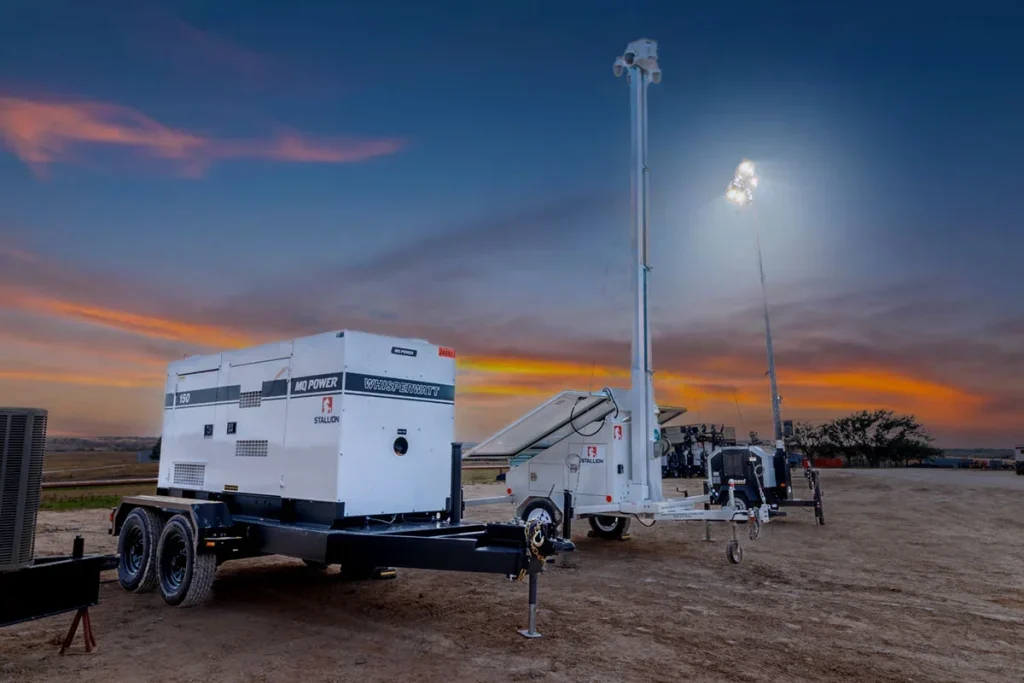
- Explore integrated power and generator bundles: Renting the trailer and generator from the same provider means the electrical connection is matched and pre-configured - one less coordination problem on setup day.
- Confirm a clear upgrade path: Can you swap to a larger unit mid-project? Add satellite connectivity? Upgrade to a double-wide? A full-service provider should offer a clear path that minimizes change-order costs and additional re-quoting.
- Ask about single-vendor jobsite solutions: Managing five separate vendors for a single jobsite creates scheduling conflicts. A provider with broad capabilities - trailers, power, sanitation, lighting, communications - simplifies the entire operation.
>>See all of the solutions Stallion provides as a one-stop-shop for your complete industrial project needs.
WHY CONTRACTORS CHOOSE STALLION INFRASTRUCTURE SERVICES
Stallion Infrastructure Services operationalizes your jobsite setup by providing fully integrated mobile workspace solutions. We match your spatial configurations, electrical requirements, and technical networks before delivery, providing move-in ready assets that perform from day one.
Our mobile office trailers are built for the realities of modern construction and industrial jobsites. Units come in a range of configurations and can be equipped with integrated power, communications, and security systems that are matched before delivery, not cobbled together on-site.
What sets Stallion apart is breadth: as a full-service jobsite infrastructure provider, we bundle mobile office trailers with generators, satellite or LTE connectivity, surveillance hardware, portable sanitation, and lighting – all under a single rental agreement, with one service team accountable for the whole package.
Rather than tracking separate rental brokers for temporary workspaces, off-grid power, and remote network routing, procurement teams maximize productivity by sourcing an integrated, single-vendor staging platform. This proactive approach eliminates administrative friction, protects your data workflows, and ensures your project command center establishes baseline site readiness from day one.
How Stallion Stands Out:
Flexible Configurations
Flexible trailer configurations in multiple sizes with layout options to match your workflow and site footprint
Integrated Power Systems
Integrated power systems with generator bundles and matched electrical hookups
Satellite & LTE Connectivity
Satellite and LTE connectivity including Starlink for Business, LTE, and cellular amplification for remote sites
Security & Surveillance
Security and surveillance hardware that can be integrated with your office trailer package
Full Jobsite Coverage
One vendor for trailers, power, sanitation, lighting, and communications
Construction-Ready Setup
Construction-ready setup by crews experienced in active jobsite environments
>>Learn more about the full scope of Stallion’s custom integrated solutions for your industry.
FAQs About Mobile Storage & Office Rentals
What is a container conversion mobile office?
A container conversion mobile office is a high-strength administrative workspace engineered by modifying a heavy-duty steel sea container. These robust units feature weather-resistant insulation, integrated climate control, electrical configurations, and secure multi-pane windows, making them ideal for tough industrial jobsites.
What utility hookups are required to run a jobsite office trailer?
Standard mobile office trailers require an external power supply matching their internal panel configuration (typically a 120/240V split-phase connection via a matching utility pedestal or generator). If your unit includes internal plumbing, it will also require direct connections to fresh water and dedicated wastewater management systems or compatible on-site holding/tank solutions, depending on the configuration.
Can I rent an office trailer combined with built-in tool storage?
Yes. Stallion offers versatile combo units featuring separate, dedicated configurations within a single 40-foot asset. This design provides a climate-controlled administrative workspace alongside a separate, high-security structural steel tool storage bay.
How are mobile office trailers anchored against severe weather?
To withstand high winds and severe weather thaws, technicians anchor mobile trailers using heavy-duty steel auger ground anchors and rugged structural tie-down straps, combined with solid concrete blocking to preserve perfect structural level.
Ready to streamline your early project staging?
The right mobile office trailer doesn’t just provide four walls and a roof, it creates a functional command center that supports your team’s productivity, keeps sensitive materials secure, and scales with your project. Use this checklist to ask the right questions before you sign, and don’t settle for a provider who can’t answer them.
Stallion Infrastructure Services offers a full range of mobile office trailers that can be packaged with integrated power, connectivity, and security solutions – all tailored to construction-specific requirements.
Protect your project.
Control your costs.
Partner with Stallion.
Contact a Stallion Infrastructure Specialist today to receive a comprehensive, single-source, integrated solutions blueprint.