
Construction has quietly become one of the most digitally dependent industries in the world. What used to run on clipboards and two-way radios now depends on real-time data, cloud-based collaboration, AI-driven workflows, and edge-connected jobsites that must function exactly like remote corporate offices.
And yet, the network infrastructure to support that shift has not kept up.
That operational gap is exactly why we are seeing a growing number of enterprise construction companies rethink how they approach connectivity—especially at the edge.
The Reality: Jobsites Are Now Mission-Critical Network Environments
Modern construction sites are no longer temporary, offline setups. They are highly active network environments acting as:
- Data Collection Hubs: Powering IoT sensors, environmental monitoring, and equipment telemetry.
- Collaboration Centers: Relying on Procore, BIM 360, and heavy cloud-based design tools.
- Security Environments: Supporting AI-enabled video (like Mobile Surveillance Trailers), access control, and remote monitoring.
- Operational Command Posts: Managing scheduling, logistics, and safety workflows.
The expectation is simple: Everything should work, all the time, regardless of location. But the reality of jobsite internet is much harder. Sites are remote, perimeters are dynamic, and traditional ISPs are either too slow to deploy or entirely unavailable. Furthermore, internal corporate IT teams are stretched thin and are not built for field execution. When a network goes down, productivity across an entire project stalls, threatening commissioning timelines.

Why Starlink Changed the Game (But Didn’t Solve the Problem)
Low Earth Orbit (LEO) satellite technology – led by Starlink – has fundamentally changed what is possible in remote site communications. You can now deploy high-speed, low-latency internet virtually anywhere in days, not months.
For construction, that is a massive breakthrough. But here is the operational reality that gets missed: Connectivity hardware alone does not equal operational connectivity.
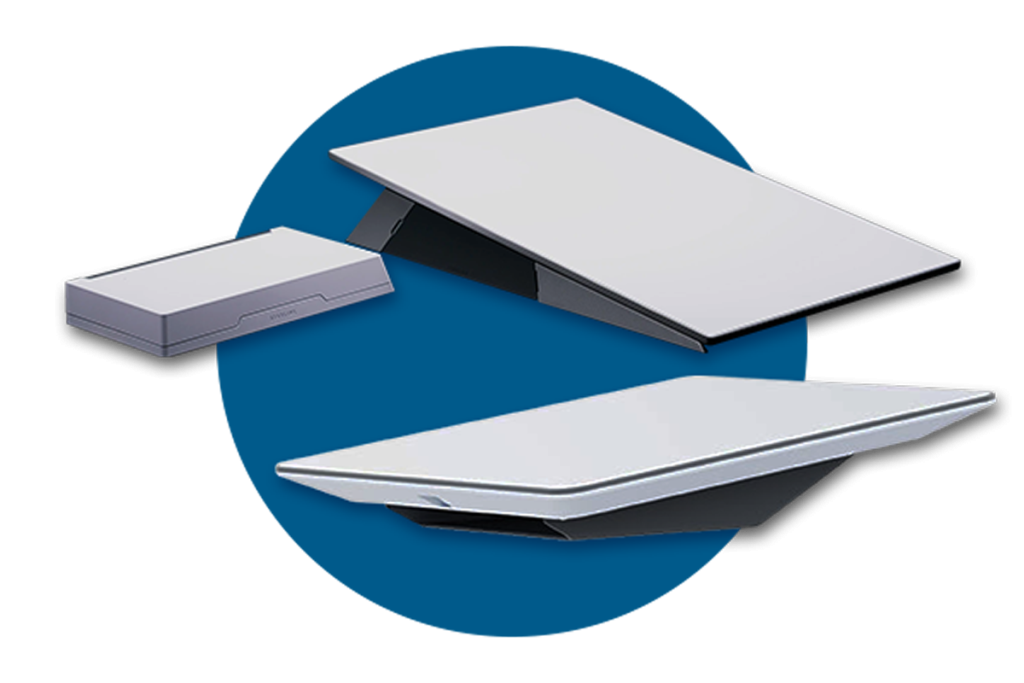
Buying terminals is easy. Making them work reliably, securely, and at scale across dozens or hundreds of active jobsites is not. Common failure points of unmanaged hardware deployments include:
- Improper physical installation and positioning (obstructed line-of-sight).
- Lack of network redundancy or cellular failover.
- Zero integration with enterprise IT and cybersecurity policies.
- No visibility into bandwidth performance or usage.
- No single point of accountability when the network breaks.
What starts as a “quick win” for a single project manager often turns into an unmanaged, vulnerable sprawl for the enterprise.
The Shift: From Hardware Product to Managed Service
Enterprise builders are not looking to become telecom operators. They are looking for reliability, speed to deploy, standardization across all projects, and accountability when issues arise.
Instead of buying connectivity hardware, leading firms are outsourcing Connectivity as a Managed Service – securing clear Service Level Agreements (SLAs), centralized support, and full lifecycle ownership.

Why Field Service Is the Critical (and Overlooked) Component
Here is the uncomfortable truth about most connectivity providers: They are not built to execute in the field. They can ship hardware, provision data plans, and provide remote IT support. But they do not show up at your jobsite. In construction, that is everything.
The difference between a working network and a dead zone often comes down to:
- Proper physical installation on rugged terrain.
- On-site troubleshooting when equipment is moved or damaged.
- Rapid response when site conditions or weather change.
- Direct coordination with field superintendents and site leadership.
This is where a field-service-first model becomes a massive competitive advantage.
How Stallion Connects the Unconnected
At Stallion, we approach managed connectivity differently because we didn’t start as a telecom provider. We started on the jobsite. That foundation matters because delivering managed connectivity at scale requires execution infrastructure, not just technology.
When enterprise customers partner with Stallion for jobsite internet solutions, they receive:

Speed to Deploy at Scale
We stand up fully connected jobsites - often within days - because we already operate nationwide field teams, logistics networks, and deployment workflows.
Integration with Enterprise IT
We don’t operate outside of your IT department; we act as an extension of your NetOps teams. We align with your strict security policies and provide transparency at every level.
Standardization Across the Portfolio
Whether it’s 10 sites or 200, customers get a consistent, repeatable solution—from hardware selection and network design to the support model and daily reporting.
Full Lifecycle Ownership
From initial install to 24/7 monitoring, field support, and final decommissioning, there is no finger-pointing. One partner owns the outcome.
Field Execution + Centralized Support
This is the ultimate unlock: boots on the ground when you need them, paired with 24/7 centralized support, visibility, and real accountability tied to network performance.
Is your jobsite network built for the edge? Don’t let unmanaged internet put your project timeline or security at risk. Partner with Stallion for rapid deployment, 24/7 monitoring, and field-tested reliability.
Protecting the Edge of Your Business
As construction continues to digitize, the jobsite is no longer a temporary inconvenience, it’s a core operating environment.
- Downtime is no longer acceptable.
- Connectivity is no longer optional.
- And unmanaged solutions are no longer scalable.
We’re still early in this transition, but the companies that win in the next decade will be the ones who treat the edge of the jobsite with the exact same discipline as their corporate headquarters. Connectivity is becoming a fully managed, mission-critical service, and field execution is what makes it real.
The winners won’t be the ones who sell the most hardware. They’ll be the ones who can deliver reliable outcomes, at scale, in the environments where work actually happens.
Stop Managing Hardware. Start Executing Your Project.
Jobsite connectivity shouldn’t be your project manager’s problem. Secure reliable, enterprise-grade internet from Day 1 with Stallion’s fully managed network solutions.

Frequently Asked Questions:
Managed Jobsite Connectivity
What is managed jobsite connectivity?
Managed jobsite connectivity is a turnkey service where a dedicated provider designs, installs, monitors, and supports a remote construction site’s internet network. It eliminates the need for project managers to act as IT support and ensures enterprise-grade security.
Why is cellular failover important for construction site internet?
Construction sites are dynamic environments where primary connections (like satellite or microwave) can be obstructed by cranes, weather, or moving infrastructure. Cellular failover automatically switches the network to an LTE/5G connection if the primary line drops, preventing costly project downtime.
How fast can remote jobsite internet be deployed?
With a managed service provider that has an active field service fleet, high-speed connectivity (utilizing LEO satellite or cellular technology) can often be deployed and operational within a matter of days, bypassing the months-long wait times of traditional ISPs.
Is Starlink a LEO or GEO satellite network?
Starlink operates a Low Earth Orbit (LEO) satellite network. Unlike traditional Geosynchronous Equatorial Orbit (GEO) satellites that sit much further from Earth and suffer from high latency (lag), LEO satellites orbit close to the surface. For enterprise construction sites, this LEO architecture is what provides the high-speed, low-latency connection necessary to run heavy cloud applications like Procore, BIM 360, and real-time security feeds without interruption.
How does Starlink's LEO constellation improve remote jobsite connectivity?
Starlink utilizes a constellation of thousands of LEO satellites that work together as a massive mesh network. For project managers, this scale means that even in the most remote or dynamic environments, jobsites can maintain high-speed coverage without relying on a single, vulnerable cell tower. However, to maintain enterprise-grade reliability, this satellite hardware must be integrated into a fully managed network with cellular failover and 24/7 IT monitoring.